


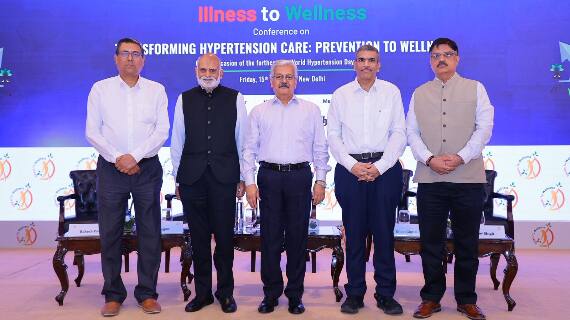
As India grapples with a growing burden of lifestyle diseases, hypertension is emerging as a major health concern among younger populations, prompting policymakers and healthcare experts to call for urgent preventive action and greater public awareness.
Speaking ahead of World Hypertension Day 2026 at the ‘Illness to Wellness Conference on Transforming Hypertension Care: Prevention to Wellness’ in New Delhi, Union Minister of State (Independent Charge) for Ayush and Minister of State for Health and Family Welfare, Prataprao Jadhav, warned that changing lifestyles, rising stress levels and declining focus on physical and mental well-being are accelerating the incidence of hypertension among youth.
Describing hypertension as a “silent killer”, Jadhav said the disease often progresses unnoticed before leading to severe complications such as heart attacks, strokes and kidney disorders. He highlighted that the government, through the National Programme for Prevention and Control of Non-Communicable Diseases (NPCDCS), is expanding population-based screening and early intervention initiatives via Health and Wellness Centres across the country.
The conference, organised by the Illness to Wellness Foundation, brought together policymakers, cardiologists, public health experts and medical practitioners to deliberate on the rising prevalence of hypertension and the urgent need to shift India’s healthcare focus from disease management to preventive wellness.
Rajesh Bhushan, former Secretary, Ministry of Health and Family Welfare, and Chairperson of the Governing Council at the Illness to Wellness Foundation, underlined that hypertension is no longer confined to urban India.
“Hypertension is as prevalent in rural India as it is in metro cities. However, because urban populations are more visible, there is a tendency to perceive it as largely an urban issue,” Bhushan said. He stressed that early diagnosis remains critical, adding that delayed detection often translates into delayed treatment and higher healthcare costs.
He also drew attention to the broader economic implications of non-communicable diseases (NCDs), noting that rising cases of hypertension and related illnesses significantly impact productivity and national GDP.
Industry representatives and medical experts at the event pointed to modern work culture and technology-driven lifestyles as key contributors to the growing health crisis.
Anil Rajput, Chairperson of the Advisory Council at the Illness to Wellness Foundation, said long working hours, sedentary routines, poor sleep quality and constant digital connectivity are increasingly affecting cardiovascular health. He also highlighted growing anxieties around Artificial Intelligence (AI) and job security as emerging stress factors.
“AI should not merely be viewed as a threat to employment. If used responsibly, it can become an important tool for improving healthcare outcomes and enhancing quality of life,” Rajput said.
Medical experts warned that awareness around hypertension remains inadequate despite the disease affecting a significant share of the adult population.
Dr Ripen Gupta, Vice Chairman and Unit Head of Cardiology at Max Smart Super Speciality Hospital, Saket, said nearly one in four adults is affected by hypertension, while awareness and treatment adherence continue to remain low.
He advocated annual blood pressure screenings along with sustained lifestyle interventions such as aerobic exercise, reduced sedentary time, yoga, meditation and improved sleep patterns.
Echoing similar concerns, Prof. Rakesh Yadav, Cardiologist and Head of Emergency Medicine at AIIMS, New Delhi, said hypertension is increasingly affecting younger age groups, including children and young adults.
“The challenge is not only awareness but consistent monitoring and adherence to treatment,” Yadav said, adding that obesity remains one of the leading risk factors driving the surge in hypertension cases.
The conference also featured specialised sessions on hypertension during pregnancy and the long-term impact of uncontrolled blood pressure on vital organs such as the heart, brain and kidneys.
Experts called for stronger public health campaigns, routine screening programmes and a more people-centric preventive healthcare framework to address the growing burden of hypertension in India.
With India witnessing a rapid rise in lifestyle disorders, healthcare leaders at the conference agreed that prevention, early intervention and behavioural change will be central to reducing the long-term economic and health impact of hypertension.